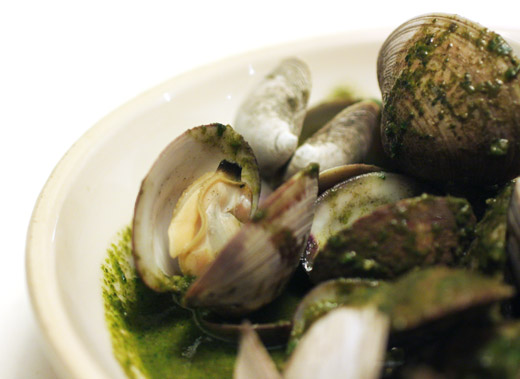
 , and I received a review copy. It acts as a guide to all the issues surrounding how to choose fish, and then it provides great ideas for turning those fish into meals. Seaver explains that the best way to work towards restoration of marine ecosystems is to support the fisheries that are working responsibly and enjoy the best choices we have with lots of seasonal vegetables. And, the book assists with just that. You won't find recipes for overfished species like bluefin and yellowfin tuna, but there are several ideas for other, sustainably caught species of fish. Since some fish are seasonal, the book is organized in sections from spring to winter with side dishes and sauces made from vegetables and herbs available at each time of year. There's also an additional section for all the types of seafood that are available year round. So far, I've tried the mussels with IPA and roasted garlic and the grilled okra with charred onion dip. Both were simple dishes with big flavors. Others I look forward to trying are warm poached salmon in red wine sauce, smoked sardines with mixed greens and fig-olive dressing, pumpkin and pear panzanella with pumpkin-seed vinaigrette, and the smoked salmon and goat cheese sandwich to name a few.Since clams, as well as mussels and oysters, are a sustainably farmed option and are always available, and since my basil plants are still going strong, I couldn't wait to try the clams with basil pesto dish. Seaver prefers the sweetness in walnuts to the flavor of pine nuts for his basil pesto. So, walnuts were toasted, and then they were tossed in a colander to remove some of the skins. Another difference with this pesto was the choice of mostly canola oil with just a little added extra virgin olive oil. The two oils and some garlic were placed in a blender and pureed, and then basil leaves and walnuts were added and blended until smooth. Then, littleneck clams were steamed in white wine. When open, the clams were transferred to a serving bowl, the cooking broth was poured into a mixing bowl while leaving any sand in the pot, and the basil pesto and some butter were stirred into the broth to form a sauce. The sauce was poured over the clams, and toasted bread was served on the side. The flavors were bright and fresh, and we used the bread to capture every bit of the sauce.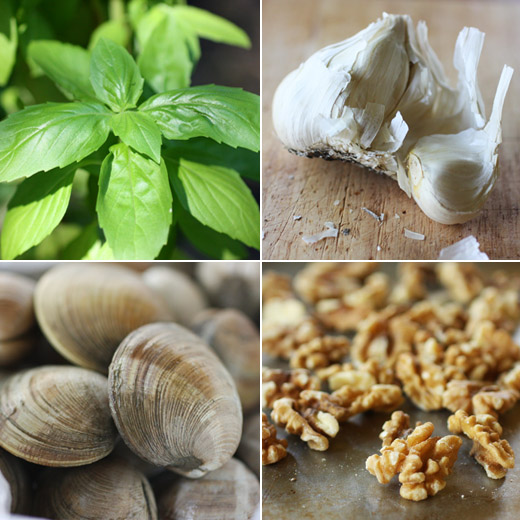

 , and that’s where I found this recipe. As with all the recipes in this book, this one included an upgrade option for tweaking the main ingredients. It’s a kind of healthy type of biscotti with whole wheat pastry flour, oats, walnuts, and dried fruit, and the upgrade was the addition of sunflower seeds, sesame seeds, hemp seeds, and flaxseed meal. There were also additionl tips and an overview of biscotti making. For instance, in the US we have adopted biscotti and made it our own. So while the traditional Italian biscotti or cantucci are very dry and crunchy and usually flavored with anise, our American biscotti are slightly cakey in comparison with lots of additional flavors.This breakfast biscotti recipe is of the American style, and this was an easy cookie dough to prepare since everything was just whisked and then stirred together. All purpose flour was combined with whole wheat pastry flour, baking powder, and salt. In a separate bowl, brown sugar and oats were mixed. Then, milk and butter were heated until the butter melted, and that was added to the oat mixture and left to stand for a few minutes. Eggs and vanilla were added followed by the flour mixture, and then I added toasted chopped walnuts, dried cranberries, sunflower seeds, sesame seeds, hemp seeds, and flaxseed meal. The dough was transferred to a silpat-lined baking sheet, and using wet hands, I formed it into a long, rectangular shape, not too wide. By using wet hands to shape the dough, it will become shiny as it bakes. I needed the biscotti to fit into the cellophane bags I had already bought, so I made the shape about four inches wide. The first baking was at 325 degrees F for about 35 minutes. The pan was removed from the oven and left to cool, and the oven was turned down to 300 degrees F. Once cool enough to handle, the baked dough was transferred to a cutting board and cut into half inch or so slices. The slices were set on a baking sheet, on their edges, and the second baking was for 25 minutes. I always worry biscotti might not be completely crunchy, so I moved the cookies around on the sheet and gave them five more minutes in the oven just to be sure.
Can I show you one more cookie? I hope you said yes because this was my favorite cookie I baked for Christmas this year. That sounds like I'm being mean to the other cookies, but I'm really not. Of course I liked them all, but this one with the stacked doughs was a different kind of cookie. The technique got me thinking as well. If two doughs can be stacked as they are here, why not three? And, next time, I can try different flavors depending on the season or the occasion. I followed the original recipe for these from the December 1998 issue of Living magazine. I found the page in my files when I was checking to see if there was something I'd tucked away from years past that I should try. I love it when I find a gem like this hiding in my files. So, the two types of dough in this cookie are orange-sable dough to which dried cranberries were added and a chocolate-espresso dough to which toasted walnuts were added.I started with the orange-sable dough, and it was made with almond meal, confectioners' sugar, butter, orange zest, an egg, lemon juice, and flour. You can grind blanched almonds in a food processor or use almond meal as I did. Once the dough came together, dried cranberries were stirred into it, and it was pressed into an eight-inch square pan lined with plastic wrap and set aside. Next, the chocolate-espresso dough was made with flour, Dutch-process cocoa powder, finely ground espresso, butter, confectioners' sugar, and vanilla extract. I used a mix of ordinary Dutch-process cocoa powder and some very dark and rich black onyx cocoa powder which gave the dough a deep, black color. Toasted and chopped walnuts were added to the chocolate dough, and it was pressed on top of the orange-sable dough. The pan was chilled at least two hours or overnight in my case. The next day, I removed the stacked doughs, cut two-inch wide rows which were then cut into skinny, one quarter inch cookies to be baked.

 . In that book, she mentioned it several times, and one mention in particular was in a dish of haricots verts with walnuts and walnut oil to which she suggested adding small potatoes. A few weeks ago, there was a party at Rain Lily Farm in Austin celebrating Hesser's new book The Essential New York Times Cook Book
 . When she signed my copy of the new book, I mentioned to her that I had been trying to find grains of paradise because I'd become so curious about it. She encouraged me to keep looking. When I got home, just for fun, I checked to see if this spice was used in any dishes in the new book of over 1,000 recipes from the New York Times. The index led me to page 30 for a Bloody Paradise which is a bloody mary cocktail made with grains of paradise. Hesser wrote in the intro to that recipe that she had become obsessed with the spice in 2000 and was (jokingly) sure Americans would become convinced they couldn't live without it. Well, one did. As luck would have it, just two weeks ago, Austin got its very own, brand new Savory Spice Shop. Let me just say that I now have easy access to not just grains of paradise but also tomato powder, various cocoa powders, a plethora of chile powders, and peppercorns of every color. So, what are grains of paradise anyway, you may be wondering. I turned to my deluxe edition of the Food Lover's Companion
 which I received as a review copy last year. In the spice glossary, grains of paradise are defined as "small, brown, round seeds indigenous to the west coast of Africa and used as a spice. Though hot and pungent, this spice has an exotic spicy quality that hints of ginger, cardamom, coriander, citrus, and nutmeg." Hesser uses it interchangeably with black pepper. In the top right photo below, black peppercorns are on the left and grains of paradise are on the right. The grains need to be ground just like black pepper, and I placed mine in a spare peppermill for easy use. Kurt and I tasted ground grains of paradise side by side with freshly ground black pepper. We found the two spices to be similar with grains of paradise seeming less hot and more herby with a slightly stronger, almost piney flavor that's also found in black pepper. I detected a faint suggestion of nutmeg in it as well.

 out of my to-read stack. I received a review copy a while ago and had been hearing good things about it. The book is by Amy McCoy, and her blog is also called Poor Girl Gourmet. What we have here is a food lover who had become accustomed to spending a lot on groceries each week. When the economy hit a snag, she needed to scale back her grocery budget but wasn’t willing to compromise on quality. By sticking to a list, not splurging on expensive items, and reducing the amount of meat purchased, McCoy was able to cut her food bill in half. This book includes recipes for dishes that fit her new approach to shopping and cooking, and the good news is that it’s not all boiled bulgur wheat dinners. The book is full of really good, fresh, and flavorful meals that are all under $15 and serve four. In the soups and salads chapter in addition to the salad I’m showing here, there’s a summer romaine and corn salad with chicken and lime corn cream dressing. In entrees, you’ll find kale lasagne with walnut pesto, chicken in cider gravy, and roasted chicken with spicy orange sauce. There are also vegetables and sides, bakery and desserts, and a chapter called splurges for special occasions. There’s a simplicity to the recipes in that fewer ingredients make for less expensive dishes, but that also allows you to appreciate each item that is used. For instance, I decided to make the orzo salad with sun-dried tomatoes and walnuts, and as I read the recipe, I thought about adding basil or a little garlic or maybe some fresh tomatoes too. I think adding any of those things would have muddied the nice balance of what was already there. To make the salad, orzo was cooked and drained and then transferred to a serving bowl. Olive oil, chopped sun-dried tomatoes, the dry kind not in oil, chopped toasted walnuts, crumbled feta, and chopped fresh oregano were added. I have lots of oregano in my herb garden, so that ingredient was free for me. The pasta salad was to be served on top of a bed of lettuce, but I’ve shown it in a bowl by itself in these photos. In the back of the book, there’s a chapter on wines which includes information about finding value buys in less well-known varietals. I learned about negroamaro, which is from Puglia, and I brought home a bottle of a rose version of it to enjoy with this meal. It was dark as far as roses go, not sweet, and a nice, chilled wine for summer.
I had leftover dates after making tamarind-date chutney, and I started thinking about different ways to use them in baking. Date scones came to mind, and I know I have a recipe for walnut date bars somewhere, but neither of those options were quite right. I was indecisive until I saw the banana-date tea cake recipe in Tartine . This was perfect. It’s a simple quick bread with lots of banana flavor, crunchy walnuts, and sweet, chewy dates. The batter is mixed, poured into a loaf pan, topped with long slices of banana, and that’s it. When I’m making use of a leftover, I feel like what it’s going into needs to be a simple preparation, and I had all the other ingredients for this on hand.Bananas were mashed and eggs and vanilla were added to them. Flour was sifted with cornstarch, cinnamon, baking powder, and baking soda. Butter was creamed with sugar, the banana mixture was added, and then the flour mixture was folded into the batter. Toasted and chopped walnuts were added with pitted and chopped dates. I use kitchen shears to cut dates in half, pick out the seeds, and then cut them into chunks. It seems easier to me to cut with shears since the dates are so sticky. The finished batter was placed in a greased loaf pan, and then it was to be topped with full-length slices of banana. My banana broke in several places as I sliced it, so my slices were quartered rather than full-length. It was still pretty enough though, or so I thought. The banana slices were sprinkled with sugar, and the tea cake baked for a little over an hour until an inserted cake tester came out clean.
 Fresh, crisp, light, and brightly-flavored aren’t terms that are used to describe winter food very often. But, this is a winter salad, and it’s all of those things. Those cute boxes of clementines in all the grocery stores had been calling out to me for weeks, and I finally brought one home. I haven’t yet decided how to use the remaining 50 or so clementines other than for snacking, but seven of them were delicious in this salad. There are also kumquats, hence the name, celery slices, and crunchy walnuts. I found the recipe in Super Natural Cooking by Heidi Swanson.
The clementines were peeled, and the segments were pulled apart. Celery stalks were thinly sliced on a diagonal. I really like celery leaves, and I tend to use the interior stalks with leaves intact for salads. So, the slices and chopped leaves joined the clementine segments in a large bowl. Then, ten kumquats were thinly sliced, seeds were scooted aside, and those slices joined the salad followed by toasted walnuts. A quick vinaigrette was made from lemon juice, olive oil, and salt and pepper. The vinaigrette was carefully mixed into the salad by hand so as to prevent the citrus pieces from breaking. Last, the plated salad was topped with parmesan shaved from a block of cheese.
 There’s nothing wrong with typical, slow-roasted and braised winter dishes, in fact there’s one I’m planning to mention soon, but this salad was a nice bit of freshness in the midst of this season. It was sweet, tart, nutty, and fruity all at the same time. As I served it, I thought it might also be nice on a bed of baby arugula leaves to add a peppery note, or fennel slices might be a lovely addition to it. I don’t mean to overcomplicate it though because the simplicity of its mix of flavors was great just as it was.
 Is it just me, or have there been an awfully lot of tempting apple cakes out there lately? I’ve wanted to try them all, but I knew what would happen if I had an entire, big apple cake in this house. It would disappear too quickly, and I would need to spend a lot more time in running shoes. When I found this recipe for apple muffins, it seemed like a perfect compromise. Kurt loves muffins for breakfast, and a few could go into the freezer for a later date. The other part of this story is that one of those cake recipes that is tempting me involves apples and blackberries. When I found some fresh blackberries from Mexico at the grocery store, I had to add them to the tops of these muffins. I found the recipe on Epicurious, and it’s from the September 1997 issue of Gourmet.
My only changes to the original recipe were to bake the muffins at regular size rather than as mini muffins and to top them with blackberries. I left the apple chunks slightly bigger than one-quarter inch pieces and didn’t chop the walnuts fine either, but no big changes. While the muffins were baking, apple cider was simmered until reduced to a syrup. When the muffins were removed from the oven, they were poked on top with a skewer and then brushed with the syrup.
 With apple chunks, walnuts, apple cider, and blackberries in the muffins, these were full of delicious. The syrup glaze on top kept the muffins moist and gave them a little shine. The walnuts were particularly nice with the flavor of apples and cider. This was a practical choice for satisfying my apple cake craving, but that doesn’t mean I won’t change my mind and bake a big, full cake in the very near future.

I just recently got a copy of the Greyston Bakery Cookbook, and as I read through the cakes chapter, I started mentally assigning each cake to a future occasion. The Mexican hot chocolate cake might be good for New Year’s, the steamed lemon cakelets would be lovely in the spring, maybe we should have the mocha kahlua cake on Christmas Eve, I want the fresh coconut mousse cake for my birthday, and the Bermudian rum cake would be great for next Monday because no other occasion was soon enough. After the cakes come the tarts which are followed by the cookies and bars. Since I wasn’t willing to wait for a special occasion to get baking, I decided to start with the oatmeal maple bars. All of these recipes come from the Greyston Bakery in Yonkers, New York which employs people from the community who may have previously had a hard time finding a stable job. Their made from scratch sweets are sold at the bakery, on the bakery’s web site and at shops and restaurants in New York City. There is much more information about the social mission of the bakery and the Greyston Foundation on their web site. I’ve never visited the bakery, but I had heard a lot about it, and the book came highly recommended.
As I wrote down a shopping list of ingredients for these bars, I kept flipping back to the page with the lime bars with white chocolate. In the end though, I chose to welcome the fall season with the flavors of oatmeal and maple. The bars are a mixture of oats, butter, sugar, pure maple syrup, eggs, vanilla, grated orange zest, raisins, and walnuts. The raisins were supposed to be currants, but for whatever reason, Whole Foods had no currants and I was too lazy to make another stop. The raisins were fine here, and the important thing was actually the orange zest. It definitely should not be skipped. The bars were baked in a nine-inch by thirteen-inch pan and then were left to cool. Once cool, a glaze made from butter, maple syrup, cream, and confectioner’s sugar was to have been drizzled on top. The photo in the book shows a nice, thick glaze that was drawn across the bars in lines. My glaze, however, was not of such a consistency. I tried letting it cool for extra time in hopes it would thicken. I tried whisking in a little more confectioner’s sugar. And, then, I gave up and just poured the thin glaze all over the top of the uncut bars and placed walnut halves in what would be the centers of each of 24 pieces.
 My glaze may not have looked liked that in the photo, but it was delicious. The chewy, bars are an addictive flavor combination of orange, walnut, oats, and a hint of maple while the glaze adds more maple flavor on top. Cut into cute, little squares, these are hard to resist. Now, I’m starting to think those cakes don’t really need to be reserved for special occasions, and even if they do, I should probably test them first anyway, right?


A composed salad is like a mini, refined salad bar of your own. The refined part is evident in the obvious lack of a sneeze guard. The ingredients are prepped, possibly tossed with dressing, and arranged on a platter for each person to serve him/herself. You can choose how much of each item to include on your own plate, and arrange things as you choose. This particular composed salad was in the July issue of Living magazine. Reading the title alone made me sure this was a salad I wanted to eat, but then when I read the recipe, I found out there’s also a goat cheese puree and sherry vinaigrette that made it sound even better. The walnuts were supposed to have been candied with honey and some savory ingredients too, but I decided to omit the sweetness and keep them firmly in the savory category.
There are several little parts of preparation for this salad, but they’re all very simple and very worth doing. First, the broccoli was roasted with extra virgin olive oil and salt and pepper. Meanwhile, canned chickpeas were rinsed and drained and then added to a saucepan in which some chopped shallots had been sauteed. At the end of cooking the chickpeas, a teaspoon of sherry vinegar was added. Next, the goat cheese puree was made by pulsing fresh goat cheese, water, olive oil, and sherry vinegar in a food processor. Also, walnuts were roasted with garlic, lemon, olive oil, and salt and pepper. And last on the list was the vinaigrette made with dijon mustard, sherry vinegar, a tiny bit of honey, and olive oil. The only other item was the romaine which I chopped rather than leaving the leaves whole. I made the goat cheese puree, vinaigrette, and roasted walnuts in advance, so the actual dinner-time prep was very quick. The romaine and roasted broccoli were each, separately, tossed with some vinaigrette and placed on the platter. The warm chickpeas and roasted walnuts found places on the platter too. The goat cheese puree was spooned onto an open spot on the platter so items could be dipped through it, and extra puree was served in a small dish.
 This salad had no chance of not being a winner. I was already a big fan of roasted broccoli, chickpeas, and goat cheese, and this brought them all together in a particularly enjoyable way. It’s a casual composition that can sit comfortably at room temperature. The leftovers made an excellent lunch as well, but be sure to pull them out of the refrigerator 20 minutes or so in advance so the vinaigrette can loosen up after being chilled. I’m already thinking about using the parts of this salad on their own. The goat cheese puree was a delicious dip with broccoli, and the lemony roasted walnuts with a hint of garlic flavor would make a great snack with cocktails.

 A couple of weeks ago, I read a NY Times article about some addictive, crack-like granola, and that was the point at which I decided I had to make some homemade granola of my own. The recipe involved olive oil, and a sweet and salty contrast in the ingredients apparently made it irresistible. I also saw a homemade granola recipe on The Cosmic Cowgirl’s site a few months ago. Both The Cosmic Cowgirl’s and the NY Times recipes included pepitas which sounded great to me. Then, I recalled that Ruhlman had presented a slightly unusual granola recipe back in June. Pureed bananas and strawberries were mixed into the oats and nuts, and I had to try that. I actually consume a lot of cold cereal and granola for breakfasts, and I don’t know why I had never before made my own. I’ll definitely whip up a batch with pepitas as soon as I run out of this granola. It’s incredibly easy to make, you can tailor it to suite your taste or mood, and you can control the quantity of sugar.
With Ruhlman’s recipe, less oil is used because the pureed fruit and water add moisture that helps mix the spices throughout the oats and nuts. Then, most of the ingredients are up to you. You need to use the correct amount of oats, roughly the specified amount of nuts, but nuts of your choosing, then the spices and dried fruit are entirely your choice. I, however, followed almost exactly the quantities and ingredients suggested. I went with two bananas which were blended with strawberries, brown sugar, honey, canola oil, water, cinnamon, of which I added extra, and nutmeg. That was stirred into a mixture of oats, wheat bran, flax seed, walnuts, and sliced almonds. This was baked for an hour and was stirred every 15 minutes. Once it was removed from the oven and cooled, I added dried cranberries.
 With homemade granola, you're able to choose the ingredients, but would the taste of be that much different? Yes, of course, homemade is far better. It’s perfectly fresh and the flavors are much more vibrant than something that has been sitting in a bin or box for however many days or weeks. It was worth making this just for the aroma from the oven while it baked. I usually take my granola with some plain soy milk, but it’s even better with thick Greek yogurt. Try one of these recipes or invent a new one, and let me know your favorite nut, spice, and fruit combination.

Along with the many pounds of greens from our CSA last week, we also received a lovely eggplant. It could have been sautéed with the greens or included in a pasta dish at some point in the week, but I wanted to let it be the star. Baba ghanoush is always good, but I found a slightly different idea on Epicurious. This is a version of the Greek traditional eggplant spread known as melitzanosalata. Walnuts are used here instead of tahini.
By halving the recipe, the one eggplant made just enough puree for a snack for two with raw vegetables and toasted, sliced, whole grain ficelle. The green pepper was also from the farm, but the orange cauliflower came from the grocery store. The puree was fresh tasting, and the walnut flavor was just as good if not better than sesame. And, the recipe’s tip about using just a touch of sweetness worked well. The slight eggplant bitterness disappeared after a half teaspoon of honey was incorporated.
 I drizzled a little olive oil on top and spattered about a bit of chopped Greek oregano for serving. A note with the recipe states that this spread hails from the northern part of Greece and that country bread is traditionally dipped into it. Any toasted bread would be good with this, especially pita, but the whole grain ficelle worked nicely with the eggplant and walnut flavors.


